Securing a professional pest control service in Charleston requires direct intervention into subterranean nesting galleries and crawlspace moisture vectors that bypass standard surface chemical applications. Lowcountry structures face extreme biological pressures from subterranean termites, peri-domestic cockroaches, and invasive ant complexes that thrive within regional humidity thresholds.
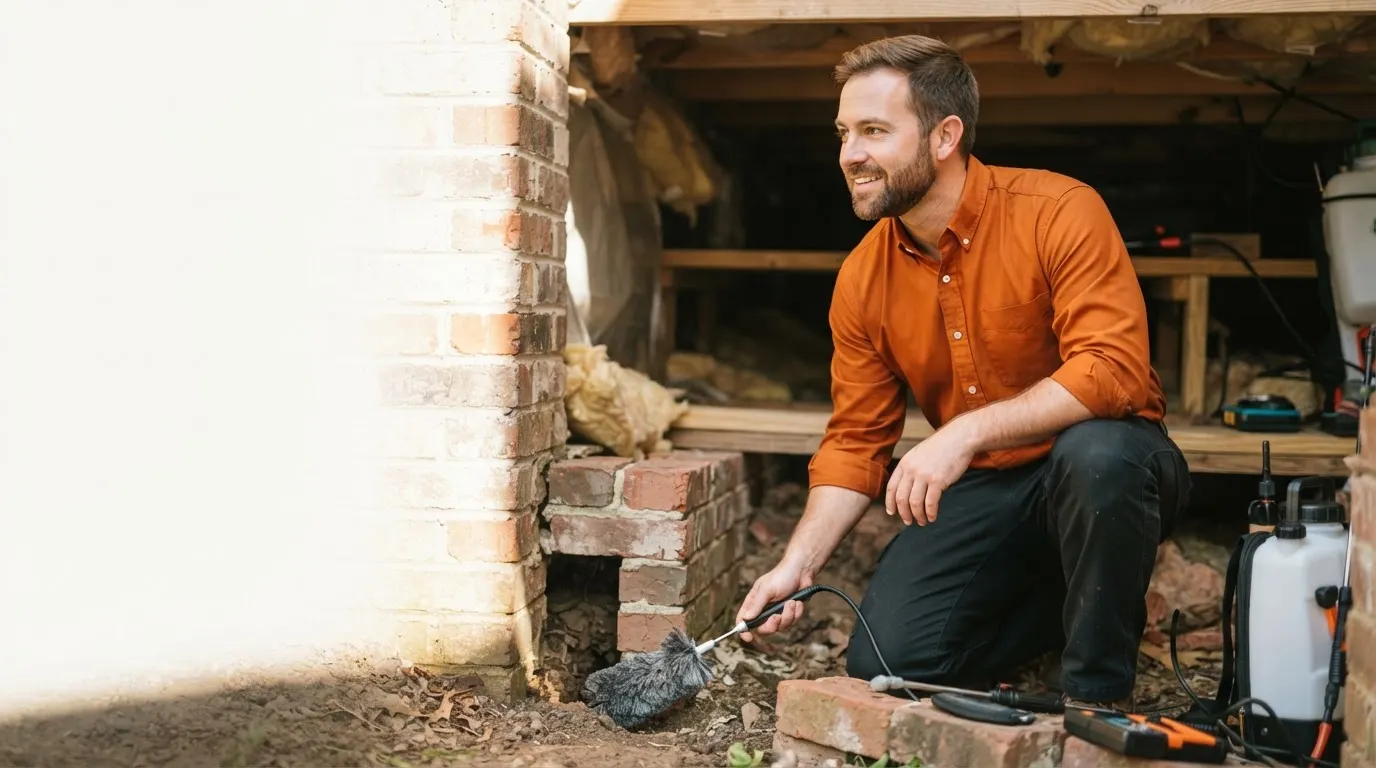
Pest control service in Charleston is a specialized structural extermination protocol engineered to isolate, penetrate, and eliminate wood-destroying organisms, subterranean insect colonies, and invasive coastal pests across humid Lowcountry environments.
Every service reflects the same meticulous attention to detail, whether it's a single job or a larger pest control service project across Charleston.
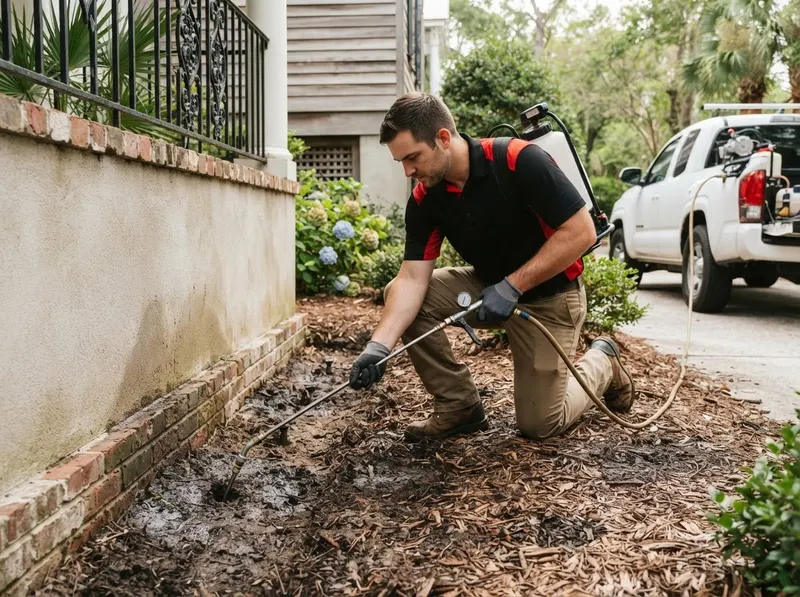
Subterranean termite control targets subterranean Reticulitermes flavipes colonies nesting beneath foundation slabs and crawlspace soils. Protocols deploy liquid termiticide trenches along exterior foundation walls and inject pressurized horizontal barriers beneath concrete patios and slab penetrations to sever foraging galleries from the main structural timbers. Technicians calculate exact linear footage and soil absorption rates according to technical guidance established by the South Carolina Department of Pesticide Regulation , delivering 4 gallons of finished emulsion per 10 linear feet per foot of depth. Continuous chemical barriers disrupt subterranean foraging tunnels, forcing colony workers into direct contact with non-repellent active ingredients that transfer back to subterranean reproductive queens through grooming and mutual trophallaxis.
Get a quote →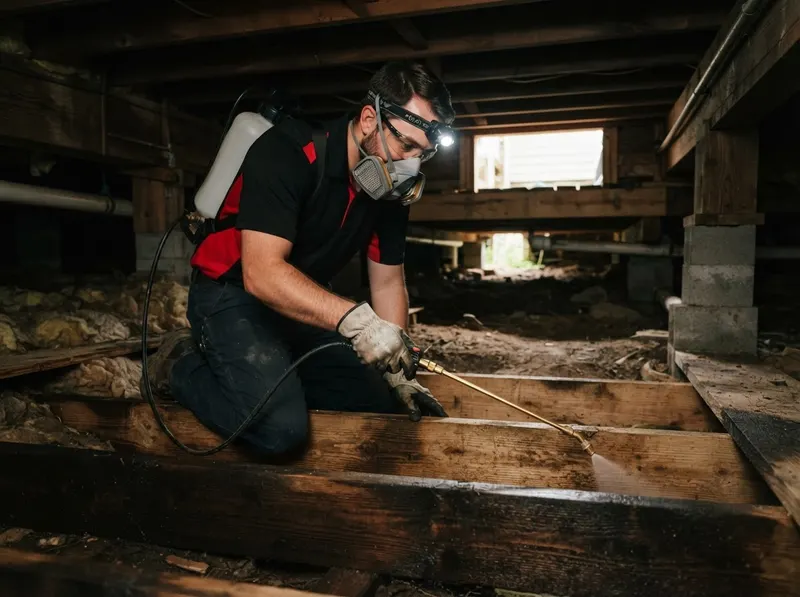
Wood-destroying organism suppression in coastal crawlspaces utilizes concentrated disodium octaborate tetrahydrate applications. The solution penetrates deeply into exposed floor joists, subfloor sheathing, and sill plates, creating a permanent chemical barrier against wood-boring beetles, drywood termites, and wood-decaying fungal pathogens. The process aligns with wood preservation standards maintained by the American Wood Protection Association , ensuring the chemical binds directly into wood cellular structures without evaporating or breaking down under prolonged exposure to relative humidity exceeding 75 percent. Field specialists measure the moisture gradient of structural timbers using calibrated pin-type resistance meters to confirm adequate depth of chemical diffusion into load-bearing sills and floor framing.
Get a quote →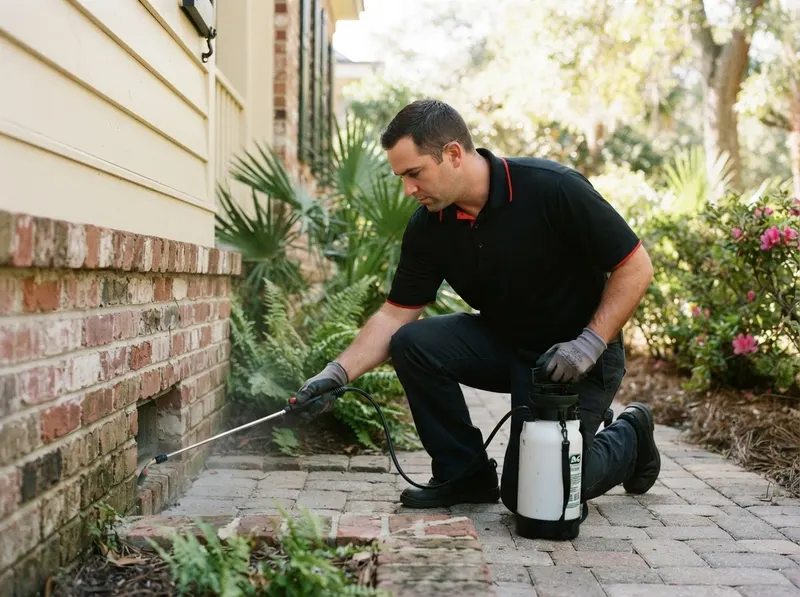
Peri-domestic cockroach control directly targets shelter zones within soffits, brick weep holes, foundation vents, and attic moisture reservoirs. Micro-injection of non-repellent structural dusts and insect growth regulators inside wall cavities dismantles breeding pockets without relying on airborne, scented room sprays. These treatments adhere to pest ecology criteria established by the Pest Control Technology Technical Resource Center , targeting the unique behavioral pathways of Periplaneta americana and Periplaneta fuliginosa. Technicians inspect flashing junctions, roofline fascia, and crawlspace curtain walls, injecting inorganic silica aerogel and hydramethylnon micro-deposits directly into concealed voids where nymphs and egg capsules aggregate during extreme summer heat.
Get a quote →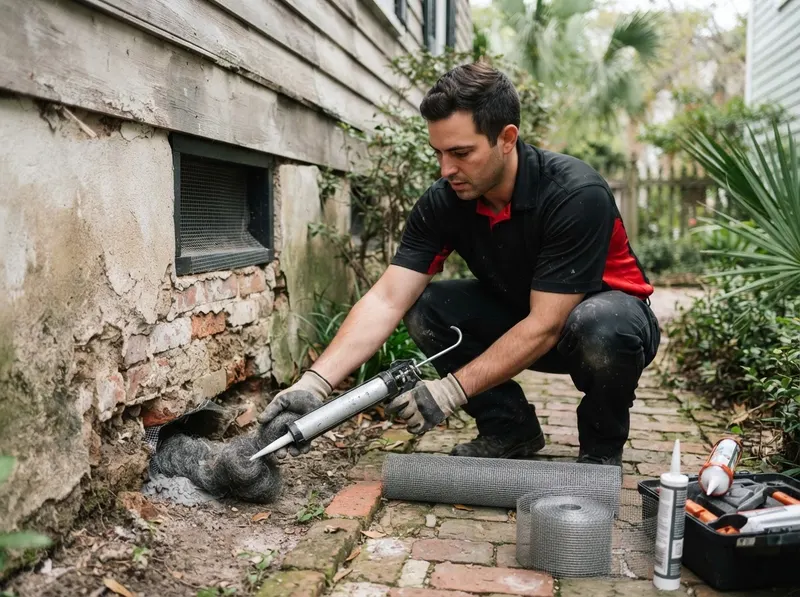
Roof rat and Norway rat treatments seal exterior crawlspace vents, roofline transitions, and plumbing wall intrusions with 1/4-inch heavy-gauge galvanized steel mesh and structural polyurethane mortars. Sub-surface mechanical traps and direct exterior burrow treatments eliminate existing populations without secondary environmental toxicity risks. Exclusion execution follows rodent management standards codified by the Centers for Disease Control and Prevention Rodent Control Module to prevent zoonotic transmission and structural wiring degradation. Technicians systematically map entry gaps wider than 1/4 inch along rooflines, foundation skirtings, and crawlspace access bulkheads, securing vulnerable structural pathways against persistent commensal rodent pressures.
Get a quote →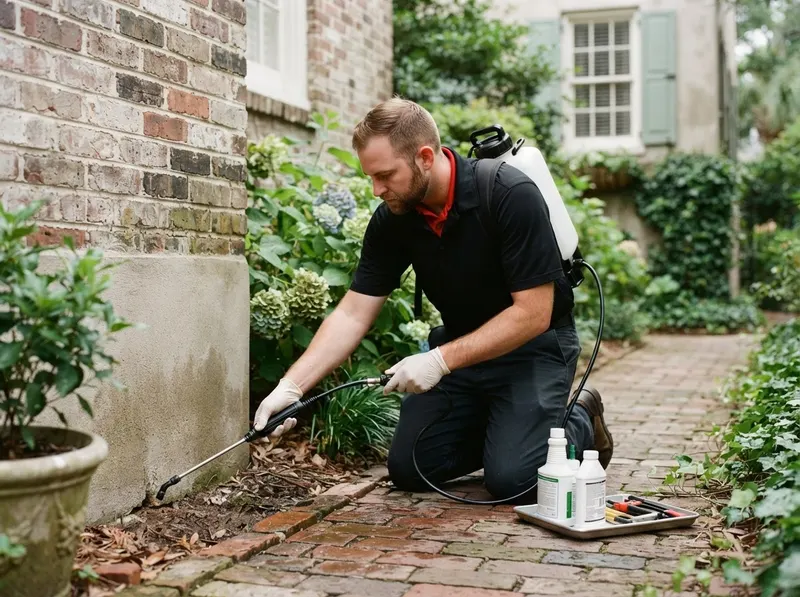
Tackling Argentine ants, odorous house ants, and red imported fire ants requires slow-acting horizontal transfer chemistry. Technicians deploy targeted, weather-resistant bait matrix systems along sub-grade foraging trails to ensure active ingredients transfer through the colony trophallaxis network directly to subterranean queens. Implementation complies with invasive species control frameworks monitored by the National Invasive Species Information Center , halting super-colony budding events triggered by conventional perimeter sprays. Specialized micro-granules and protein-carbohydrate hydrogels are placed along subterranean irrigation pathways, foundation expansion joints, and root flare interfaces where worker foraging activity remains dense and continuous.
Get a quote →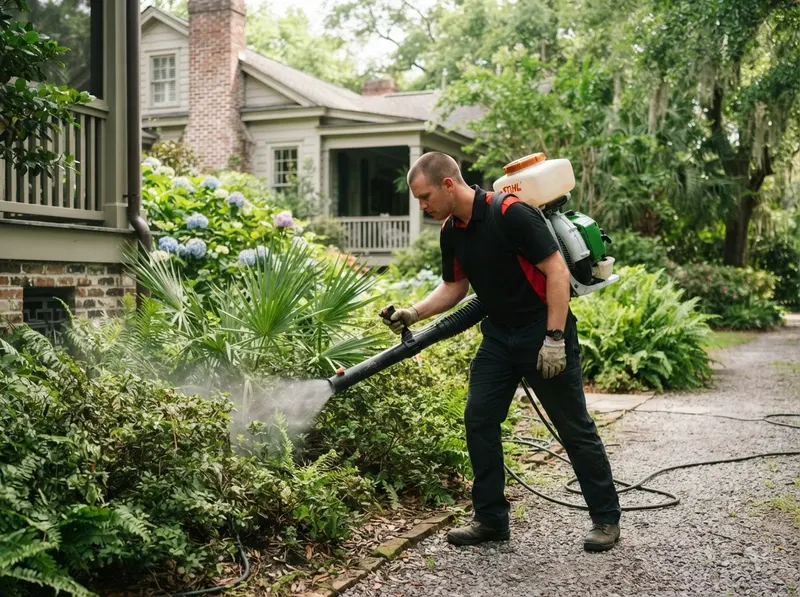
Saltmarsh mosquito and biting midge mitigation neutralizes resting habitats across shady foliage perimeters and saturated soil zones. Micro-encapsulated adulticides paired with biological larvicides interrupt the lifecycle within vegetation buffers, significantly reducing flying pest density along marshfront properties. Treatment parameters mirror integrated vector management protocols developed by the American Mosquito Control Association , safeguarding non-target estuarine aquatic life while extinguishing localized biting midge populations. Technicians systematically treat lower canopy leaf undersides, tidal boundary shrubs, and exterior damp mulch beds using high-pressure hydraulic mist units calibrated to generate droplet spectra between 100 and 150 microns for optimum leaf retention.
Get a quote →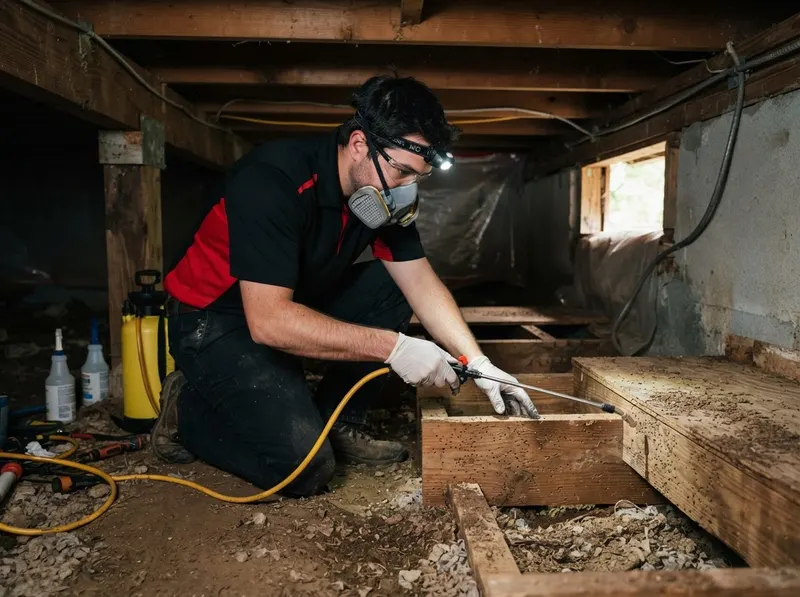
Lyctid and anobiid powderpost beetle remediation stops structural wood loss inside crawlspaces exhibiting high equilibrium wood moisture. The treatment deploys penetrating borate formulations directly to unfinished, unstained structural floor supports, killing emerging adult beetles and penetrating larval feeding galleries within joists and subflooring. Application procedures conform to the structural protection guidelines outlined by the USDA Forest Products Laboratory , ending generations of re-infestation within coastal softwoods and hardwoods. Field protocols include removing frass accumulations, checking exit holes for fresh wood powder, and treating sill plate interfaces where beetle larvae routinely burrow deeper into damp foundation timbers.
Get a quote →Slab-on-grade homes and concrete foundation additions require specialized sub-slab hydraulic injection to stop subterranean termite foraging through plumbing penetrations and expansion joints. Technicians utilize precision rotary hammer equipment to drill vertical 1/2-inch access ports through concrete slabs at 12-inch intervals along interior partition walls and exterior slab perimeters. Non-repellent liquid termiticide is pumped beneath the slab under low pressure pursuant to structural safety and application standards governed by the EPA Office of Pesticide Programs , establishing an unbroken horizontal chemical barrier beneath the living space. Every access hole is sealed flush with high-strength non-shrink hydraulic cement to preserve the structural and aesthetic integrity of the floor assembly.
Get a quote →You get a firm, itemized quote for your pest control service before any work begins, no surprises, no pressure.
Careful prep, tidy work, and a full cleanup when we are done. We treat your home and belongings like our own.
The same trusted, background-checked team from the first call to the final check.
Selecting the correct structural protocol depends on species biology, moisture dynamics, and foundation construction. If an infestation stems from subterranean colonies beneath slab footings or crawlspace piers, choose liquid termiticide trenching and pressurized void injections; if dealing with diffuse arboreal pests or localized wood rot pests, choose targeted borate surface infusions and micro-dust voids. The trade-off is mechanical disruption and initial application labor versus long-term residual durability.
For immediate interior sightings of American cockroaches or odorous house ants, direct void micro-injection halts active nesting zones; perimeter granular baiting provides extended perimeter suppression. Surface broadcast sprays fail to penetrate coastal subfloors, meaning homeowners selecting superficial chemical sprays trade lower upfront fees for chronic re-infestation cycles. When structural timbers exhibit moisture readings above 20 percent, liquid chemical barriers must be accompanied by mechanical soil moisture mitigation or crawlspace encapsulation; deploying chemicals into water-saturated timber yields erratic absorption and rapid chemical leaching.
If property managers confront mixed infestations involving both wood-destroying beetles and subterranean termites, a dual-stage protocol combining subterranean soil termiticide barriers with direct timber borate saturation provides comprehensive protection, whereas selecting either treatment alone leaves an unaddressed biological vector. For historic masonry structures with brick pier foundations, localized void injections avoid disturbing soft lime-based mortar while establishing a continuous chemical envelope that exterior perimeter granulations cannot replicate.
Every project gets a firm, written price after a free on-site visit. Ranges below for orientation.
Tell us about your pest control service job and we'll send a clear, written quote, usually the same day. Or just call and talk to a real Charleston pro.
(843) 268-6996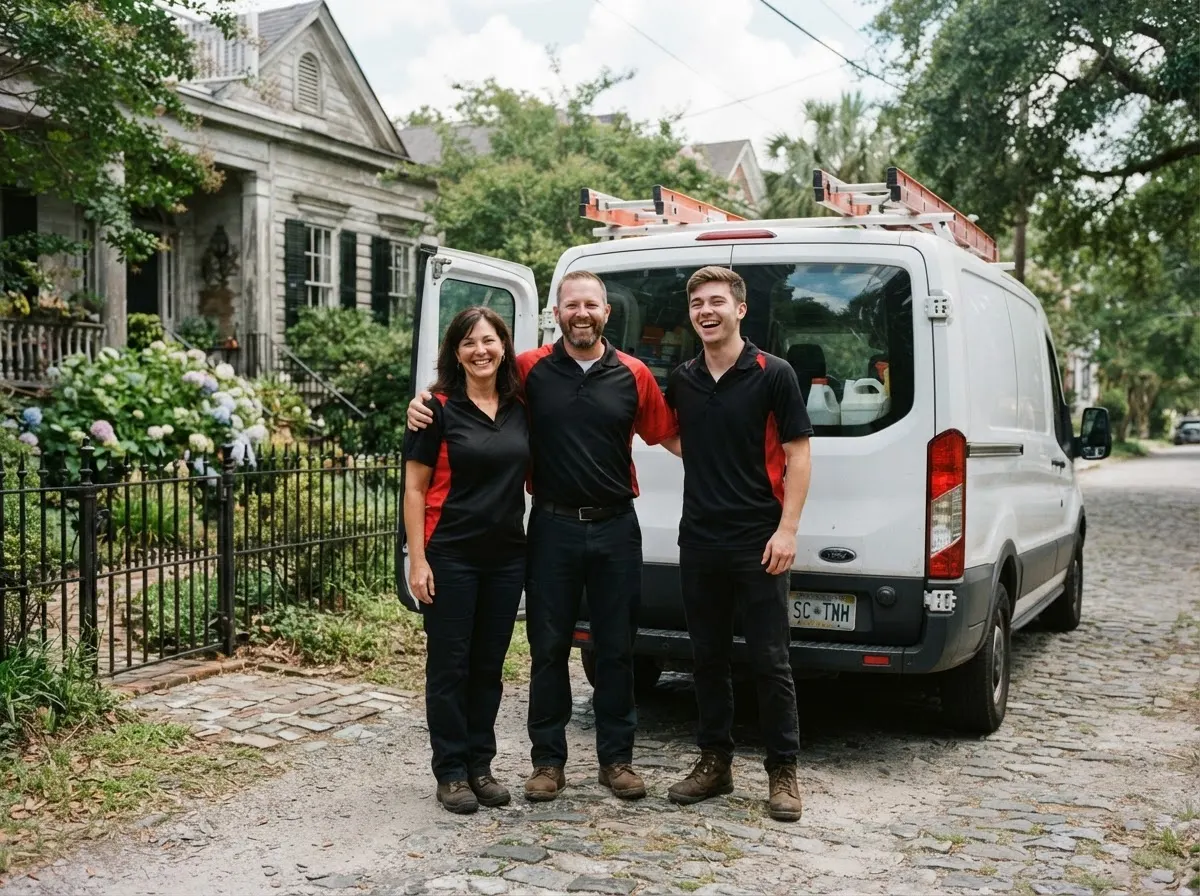
Charleston's sea-level elevation, tidally influenced groundwater tables, and historic timber frame foundations create continuous sub-surface insect reservoirs that retail solutions cannot penetrate. In historic neighborhoods like South of Broad, Wagener Terrace, Radcliffeborough, and Harleston Village, old-growth longleaf pine and cypress joists sit directly above damp dirt crawlspaces, exposing structural elements to subterranean termite shelter tubes and severe wood-decay fungi. The surrounding waterways, spanning the Ashley River, Cooper River, and Charleston Harbor, generate persistent atmospheric humidity that keeps subfloor framing moisture levels consistently elevated. Farther across West Ashley, James Island, and Johns Island, expansive sandy-loam soils and marshfront retention zones sustain massive subterranean super-colonies of Argentine ants and peri-domestic cockroaches that breach building perimeters during extreme king tide surges and severe coastal rainfall. Modern developments on Daniel Island face unique subterranean pressure as expansive fills settle near brackish wetlands, driving subterranean pests upward along utility conduit pathways and foundation slab seams. Structural protections along major transit corridors such as Savannah Highway, Folly Road, and East Bay Street require specialized chemical barrier placements adapted to variable soil hydrology, high saltwater exposure, and sensitive estuarine ecosystems throughout Charleston County. When exterior surface temperatures climb beyond 85 degrees Fahrenheit from June through September, subterranean pests retreat into the damp soil zones directly underneath residential footings, rendering conventional perimeter chemical applications completely inert unless subterranean pressure injections are introduced directly into foundation soils.
Free estimates for Charleston & the surrounding area.
 EmberRoot Bug Removal